
There is a scene in Captain America: The Winter Soldier (2014) in which Steve Rogers goes to the Captain America museum and reads about his own life and that of his friends. For everyone else, it is history—but for him, who was frozen in ice for 70 years and woke up to find that everyone he loved was dead, it is much more than that.
I certainly was not frozen in ice for 70 years, and I, of course, did not live at the same time as those about whom I have spent the last few months reading in museums. But this semester, I have had the privilege of feeling a profound closeness with the long-dead subjects of my research. When I see their building projects, visit their homes, or go to theatres they once attended, I feel as if I am seeing remnants of friends I never got the chance to meet. These people have become real to me in ways I never thought possible.
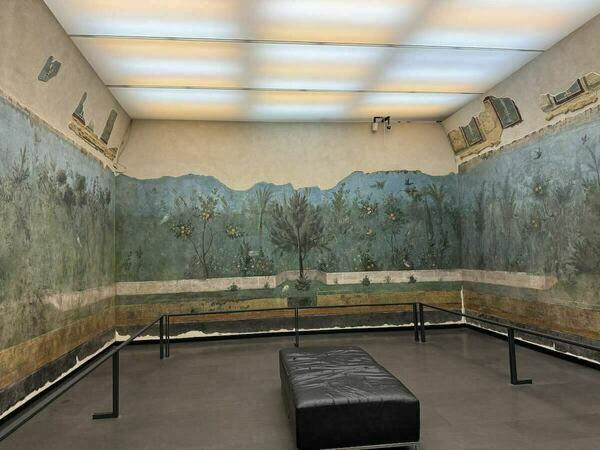
For my senior thesis, I decided to write a historical novel about the first Roman emperor Augustus, Mark Antony, Cleopatra, and Marcus Lepidus. Though I made this decision a little less than two years ago, my interest in their complex and dramatic story began long before that. I was in high school when I first read about the tumultuous aftermath of Julius Caesar’s assassination and immediately got lost down a rabbit hole. I have yet to come out of it. When he was killed in 44 BC, Caesar left behind a brilliant 18-year-old nephew and heir, a passionate and skilled general, a lover who was also the Queen of Egypt, and an experienced but politically lacking deputy. The four of them held the fate of the Western world in their hands, and my novel, told from all four perspectives, explores how each of them handled the immense burden they carried.
I was principally inspired by Augustus’s last words to his friends: “Have I played the part well? Then applaud me as I exit” (shortened from Suetonius’s The Lives of the Caesars). In my novel, entitled Have I Played the Part Well?, I emphasize human vulnerability in the face of power. As these words also incorporate a Greek tag used at the end of a comedy, I am focusing on how the arts, and specifically theatre, affect my characters’ lives and reveal their vulnerability.

And in these places, I contemplated the roles they played, just as they must have done. In the midst of this, I have decided that it is not our roles that are most important, but our questioning them.
I spent this semester abroad in Rome, which I used as a home base from which to follow my characters across Europe. I visited their homes and public gathering places in Rome, as well as various museums in which rare pieces of their lives are preserved. I also visited a series of archaeological parks and especially theatres in other cities that were important to them. Some of these included Athens, where Antony spent some of his happiest years studying, Apollonia, where Augustus was studying when his uncle was killed, and Nicopolis, near where Augustus defeated Antony and Cleopatra at the Battle of Actium. I sat in the same seats in which they would have sat, and gazed upon the stages where masterful dramatic scenes would have made them laugh and cry. And in these places, I contemplated the roles they played, just as they must have done. In the midst of this, I have decided that it is not our roles that are most important, but our questioning them.
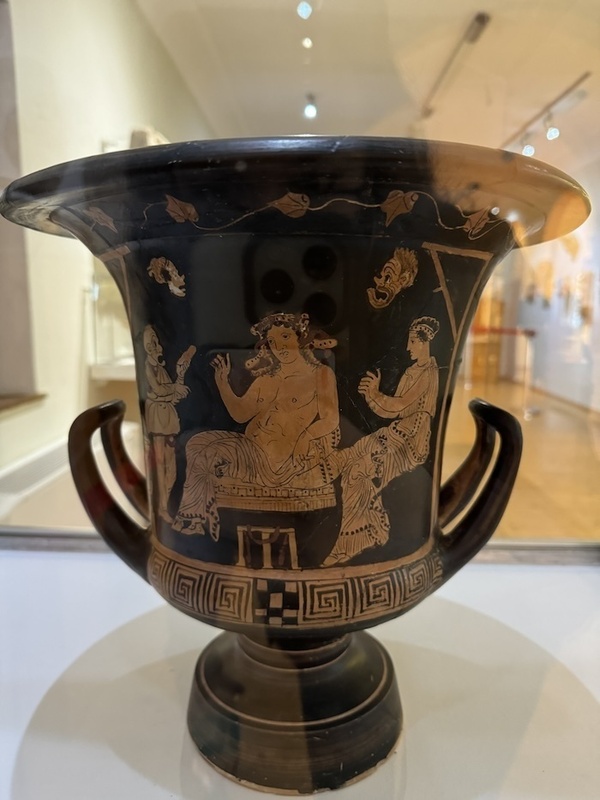
During my time in Rome, I also read many books, both classical and modern, to discover more about each of my characters’ lives and personalities. During the summer of 2025, I took an archaeology course in Rome focused on the use of space in ancient Rome and the political and historical significance of those choices. Every step on this journey has brought me closer to understanding my characters, their choices, and what they felt as they held our world in their hands. I would never have come this far without the help of the Nanovic Institute, the Glynn Family Honors Program, the Rome International Scholars Program, and the advice of Professor Denis Robichaud. Thank you all for bringing me across the world and back in time to the first century BC.
Kennedy Gallaher ’26 is majoring in the Program of Liberal Studies with the pre-health supplementary major from the College of Arts and Letters. She is also minoring in Italian studies and the Glynn Family Honors Program. During the spring semester of 2025, she conducted research in Italy for her historical novel project, supported by the Rome International Scholars program, the Glynn Family Honors Program, and the Nanovic Institute for European Studies.
Originally published by at nanovic.nd.edu on July 29, 2025.